
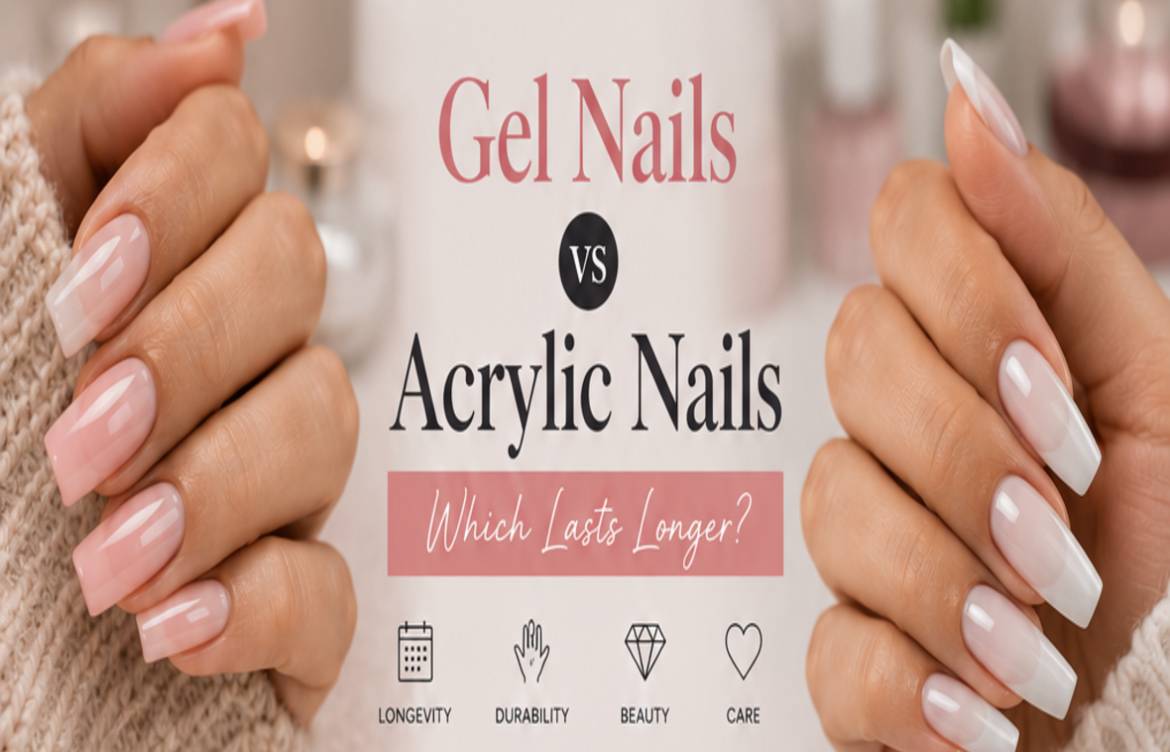
Gel Nails vs Acrylic Nails: Which Lasts Longer?
Walk into any nail salon in Dubai and you’ll hear the same question at the front desk a dozen times a day: “Should I get gel or acrylic?” It sounds like a simple choice, but sit in the chair for a moment and the options multiply — Gel X, Polygel, dip powder, overlays, extensions — and suddenly you’re second-guessing everything.
Here’s the short version before we get into the details. If pure longevity is what you’re after, acrylics usually win, holding up for three to four weeks between fills. Gels typically need attention every two to three weeks, but they stay glossier, feel lighter, and look closer to your natural nail the entire time.
That said, “which lasts longer” is only half the question. In Dubai, constant air conditioning, frequent hand sanitising, beach and pool days, and gym routines all affect how a set wears — sometimes more than the product itself. This guide breaks down both options honestly, including the things salons don’t always tell you, so you can pick the one that actually suits your life.
What Are Gel Nails?
Gel nails are built from a gel formula that stays soft until it’s cured under a UV or LED lamp. Once cured, it hardens into a glossy, slightly flexible layer — and that flexibility is the key difference. When you knock a gel nail against a car door, it bends a little instead of cracking outright.
There are two things clients love most about gel. First, the shine: a well-applied gel set still looks freshly done in week three, without needing a new top coat. Second, the feel — gel is thin and light, so most people forget they’re wearing an enhancement within a day.
The trade-off is length. Gel works beautifully on short to medium nails, but push past a certain length and the flexibility that makes gel comfortable becomes a weakness. Long gel nails can bend at the stress point near your fingertip and eventually crack there.
What Are Acrylic Nails?
Acrylic is the classic extension system: a liquid monomer mixed with a polymer powder, sculpted onto your nail or a tip, and left to harden in the air — no lamp required. Once set, it’s genuinely hard. That rigidity is exactly why acrylic remains the go-to for long, dramatic shapes like coffin, stiletto, and extra-long almond.
Acrylic also gives your technician more control. Because the product is sculpted by hand, it can be built up over flat or uneven nail beds, reshaped at fill appointments, and structured with a proper apex that distributes pressure — which is a big part of why a good acrylic set survives daily life so well.
The trade-offs? Acrylic feels thicker for the first few days, has a noticeable odour during application, and when it does fail, it tends to crack rather than bend. If you hit a rigid nail hard enough, the impact has to go somewhere — occasionally that’s your natural nail underneath.
Gel vs Acrylic at a Glance
| Feature | Gel Nails | Acrylic Nails |
| Finish | High-gloss, natural | Strong, sculpted (needs gel top coat for shine) |
| Feel | Thin and lightweight | Firmer, slightly thicker |
| Flexibility | Flexes on impact | Rigid — very strong, but can crack |
| Best length | Short to medium | Medium to extra long |
| Curing | UV/LED lamp | Air-dries |
| Typical wear | 2–3 weeks | 3–4 weeks |
| Removal time | 10–15 min acetone soak | 20–30 min (filed down first, then soaked) |
| Typical Dubai price | From around AED 120–200 | From around AED 150–350 for a full set |
Prices vary with length, shape, and nail art — a plain short gel set and a long hand-painted French acrylic set are very different appointments.
So Which One Actually Lasts Longer?
For most clients, acrylic. A properly applied acrylic set with regular fills every three to four weeks can be worn continuously for months. The rigid structure shrugs off typing, housework, and gym sessions in a way gel can’t quite match, especially at longer lengths.
But “lasts longer” hides some nuance:
Where Acrylic Wins
Impact resistance and length retention. If your nails routinely take a beating — you cook a lot, carry kids, lift weights, work with your hands — acrylic is far less likely to snap. It’s also the only realistic option if you want serious length.
Where Gel Wins
Looking good the whole time. Acrylic is durable, but its surface dulls; most sets need a gel top coat to match gel’s shine, and grown-out acrylic shows more obviously. Gel keeps its just-done gloss almost until removal day. Gel also flexes rather than cracks, so minor knocks that would chip an acrylic often leave gel untouched.
The Dubai Factor
One thing we see constantly here: frequent handwashing and sanitiser use dry out the nail plate and cuticles, which is the number one cause of lifting — for both systems. Regular pool and sea swimming softens gel over time and can cause it to lift at the edges sooner, while acrylic handles water exposure a little better. On the flip side, if you’re mostly in an office and the biggest hazard your nails face is a keyboard, gel will comfortably go the full three weeks.
Gel X vs Acrylic
Gel X (and similar soft-gel tip systems) has taken over a big share of extension appointments in the last few years, and for good reason. Instead of sculpting each nail from scratch, pre-shaped soft gel tips are bonded to your natural nail with gel adhesive and cured under the lamp.
The appeal is speed and gentleness: a Gel X full set is usually 15–20 minutes faster than sculpted acrylic, involves far less filing, feels lighter on the nail, and soaks off cleanly at the end. Most Gel X sets are worn for three to four weeks and then fully replaced rather than filled, which suits clients who like changing shape and length often.
Acrylic still wins for maximum strength, very long lengths, and clients who prefer fills over full replacements. If you’re somewhere in between, ask your technician to look at your natural nails — flat or wide nail beds sometimes suit sculpted acrylic better than pre-formed tips.
Polygel vs Acrylic
Polygel sits, quite literally, between the two systems: it has the buildable, sculptable body of acrylic but cures under a lamp like gel. It’s lighter than acrylic, stronger than soft gel, has almost no odour, and gives the technician unlimited working time since nothing hardens until it hits the lamp.
We usually suggest Polygel to clients who find acrylic too heavy but keep breaking regular gel — it’s a genuinely good middle ground, particularly at medium lengths.
Acrylic vs Dip Powder
Dip powder nails are made by brushing a bonding resin onto the nail and dipping it into coloured powder, repeating for strength, then sealing with an activator and top coat. No lamp, no monomer smell, and a typical wear time of three to four weeks — similar to acrylic.
Dip is a great option for strengthening natural nails with colour. Where it falls short is architecture: dip can’t be sculpted into long extensions or custom shapes the way acrylic can. If you want length and drama, acrylic (or Gel X) is still the better tool.
Overlay or Extension — Which Do You Need?
This one confuses almost every first-time client, and it’s simpler than it sounds.
Acrylic or Gel Overlay
An overlay is the product applied directly over your natural nail — no added length. It’s ideal if your nails already grow well but bend, peel, or break easily. You keep your own length and gain a protective, strengthening layer.
Extensions
Extensions add length using tips or sculpting forms before the product goes on. If your natural nails are short and you’ve always wanted long, elegant nails for an event, a holiday, or just everyday wear, extensions are the answer.
Plenty of clients start with extensions, grow their natural nails out underneath, and eventually switch to overlays. It’s a nice progression if long-term nail health is your goal.
Does Gel or Acrylic Damage Your Natural Nails?
Honestly? Neither product is the villain. The damage people associate with enhancements almost always comes from three things: aggressive over-filing during prep, picking or peeling sets off at home, and skipping fills until the set lifts and tears the nail plate with it.
Applied and removed properly, both gel and acrylic can be worn back-to-back for a long time with healthy nails underneath. The single most damaging thing you can do is peel off a lifting nail in the car park — you’ll take layers of your natural nail with it every time. If a nail lifts, come in and have it repaired or removed properly.
Removal: What to Expect
Gel removal is quick: the surface is buffed to break the seal, the nails soak in acetone for around 10–15 minutes, and the softened gel is gently pushed off.
Acrylic takes longer because the product is denser. Your technician will file down most of the thickness first (an e-file makes this fast and safe), then soak the remainder in acetone for roughly 20–30 minutes. Done properly, your natural nails come out intact — a little dry, which is normal, and easily fixed with cuticle oil.
Making Either Set Last Longer in Dubai
Apply cuticle oil daily — twice daily if you’re heavy on sanitiser. Hydrated nails lift far less.
A few habits genuinely extend wear here, whatever system you choose:
- Apply cuticle oil daily — twice daily if you’re heavy on sanitiser. Hydrated nails lift far less.
- Wear gloves for dishes and cleaning products. Hot water and detergents are the fastest way to shorten a set’s life.
- Rinse and dry your nails after pool or sea swimming; don’t let chlorine or salt sit under the edges.
- Don’t use your nails as tools. Keys, ring pulls, and parcel tape are responsible for more broken nails than anything else.
- Book your fill before the set looks tired — week three for gel, week three to four for acrylic. Lifting product traps moisture, and that’s how problems start.
Frequently Asked Questions
Which is better for weak, brittle nails?
Usually an overlay — gel builder or acrylic — rather than long extensions. The overlay does the structural work while your natural nail recovers underneath. Your technician should look at your nails first; genuinely thin, damaged nails sometimes do better with a strengthening gel system before any extensions.
Can I put gel polish on acrylic nails?
Yes, and most clients should. Gel polish over acrylic gives you acrylic’s strength with gel’s shine and chip resistance — it’s the most popular combination in our salon for a reason.
How often will I need to come back?
Every two to three weeks for gel, every three to four for acrylic fills. Gel X sets are usually removed and replaced in full every three to four weeks.
Can I switch between gel and acrylic?
Absolutely. Many clients wear acrylic for a holiday or event, then switch back to gel for everyday wear. Just have the old set removed professionally rather than at home.
Which looks more natural?
Gel, generally — it’s thinner, flexes like a real nail, and holds a natural-looking gloss. A skilled technician can make short acrylics look very natural too, but gel has the edge.
The Verdict
If your priority is maximum strength, serious length, and the most weeks between appointments, choose acrylic. If you want lightweight, natural-looking nails with a shine that survives the full wear cycle, choose gel. And if you’re torn, Gel X and Polygel exist precisely for people in the middle.
The best answer, though, comes from your hands, not a blog post. Your nail shape, natural nail condition, job, and daily habits all matter — which is why a five-minute consultation with an experienced technician before your first set is worth more than an hour of research.
You May Also Like
- Keratin vs Protein Treatment: Which Is Right for Your Hair?
- Natural Hair Extensions vs Synthetic: Which Option Is Better for You?
- Hair Color for Ladies in Dubai: How to Choose the Right Shade for Your Skin Tone
- Are Natural Hair Extensions Worth It for Everyday Wear in Dubai?
- How Long Do Natural Eyelash Extensions Last in Dubai’s Climate?
Explore Our Nail & Beauty Services in Dubai
Gel Nails • Acrylic Nail Extensions • Nail Art & Design • Gel Manicure • Gel Pedicure • Classic Manicure & Pedicure • Nail Repair • Luxury Nail Packages • Eyelash Extensions • Hair Treatments • Beauty Salon Services